
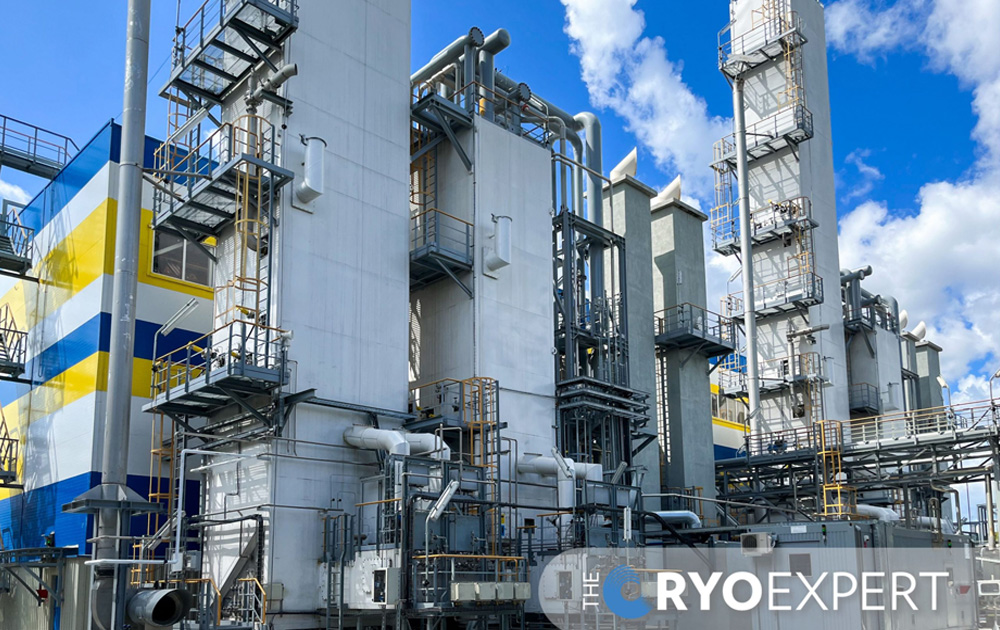
Cold Box Design Principles define the performance of cryogenic processes because the cold box acts as the thermodynamic core of the system. In practice, engineers must maximize heat exchange efficiency while minimizing footprint and heat losses. Therefore, successful design combines thermal integration, compact layout, and operability.
Cold Box Design Principles: Plate-Fin Heat Exchangers (PFHE)
First, plate-fin heat exchangers (PFHE) form the core technology in most cold boxes. Engineers design these exchangers with aluminum structures and finned passages to enable high-performance heat transfer.
As a result, PFHEs provide:
- Very high surface area density
- Multi-stream heat exchange capability
- Excellent thermal efficiency
However, engineers must also consider key constraints:
- Sensitivity to contamination, which can lead to plugging
- Limited tolerance to thermal and mechanical stress
- Thermal Integration in Cold Box Design Principles
When it comes to how well a cold box works, thermal integration is really important. Basically, engineers find ways to reuse cold energy by transferring heat between different streams of material in the process.
Specifically:
- Cold streams pre-cool incoming warm streams
- External refrigeration demand decreases
Consequently, designers must balance temperature approach and exchanger size. For example, smaller temperature approaches improve efficiency but require larger heat exchangers.
Compactness in Cold Box Design Principles
Furthermore, compactness remains a key design driver. Engineers integrate multiple components within a confined space:
- PFHE
- Piping and valves
- Instrumentation
They also surround the system with special insulation, like perlite or multilayer insulation, and use nitrogen to keep the air out. This helps to keep everything at the right temperature.
As a result, this configuration:
- Reduces footprint
- Maintains a controlled thermal environment
- Enables factory prefabrication
However, compact layouts reduce accessibility. Therefore, engineers must carefully balance maintainability and integration.
Design Insight
From a process perspective, even a few degrees of temperature approach in a PFHE significantly impact:
- Refrigeration power
- Equipment size
- Overall process efficiency
So, combining heat doesn’t just mean making a few tweaks to get the best results. It’s actually a crucial part of designing the whole process from the start.
Takeaway
Ultimately, Cold Box Design Principles require:
- Efficient PFHE selection and sizing
- Strong thermal integration between streams
- Compact yet maintainable layouts
In conclusion, the cold box does not function as a simple equipment package. Instead, it acts as the thermodynamic engine of the entire cryogenic process.

References and further reading
- European Industrial Gases Association (EIGA) — safety and standards publications
- Cryogenics (Elsevier) — peer-reviewed journal on cryogenic engineering
- Linde Engineering — air separation and liquefaction technology
- Chart Industries — cryogenic equipment and storage systems
Continue reading on The Cryoexpert
- Plate-Fin Heat Exchangers (PFHE)
- Cryogenic Distillation Columns
- Cryogenic Compressors
- Cryogenic Insulation Technology
- Heat Transfer at Cryogenic Temperatures
Working on a cryogenic project?
Get expert engineering support for ASU, cryogenic storage, vacuum insulated piping, vaporization and regasification projects — from feasibility studies to commissioning. Tell us about your project and get a response within one business day.