
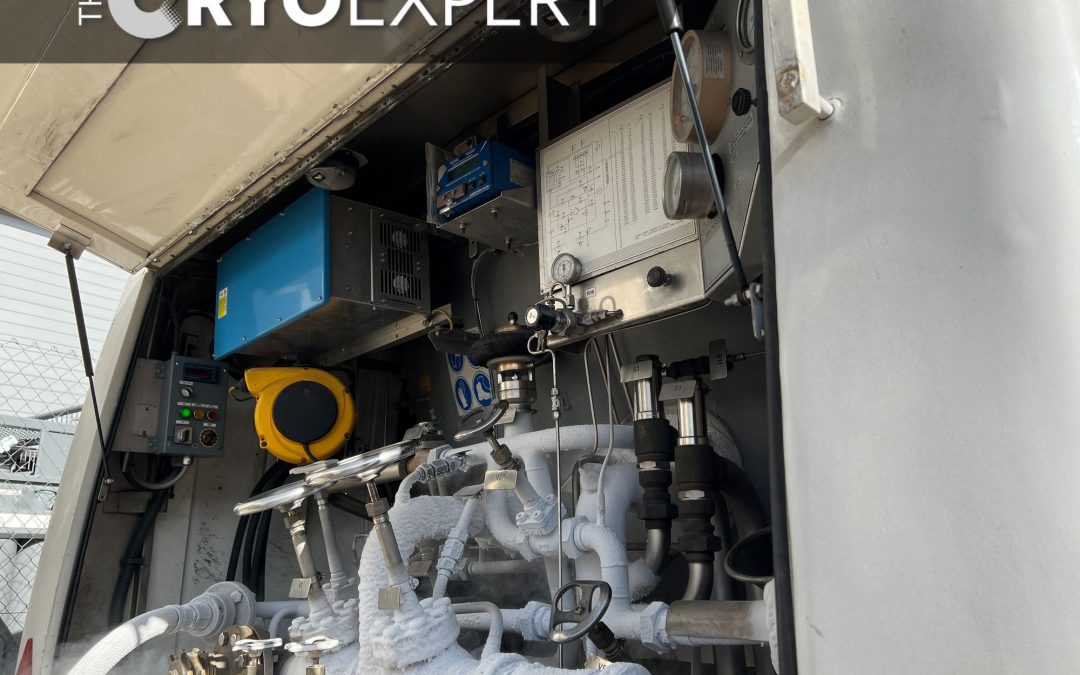
Sealing the Cold
Cryogenic valves and instrumentation operate under extreme conditions. These components must withstand very low temperatures, large thermal gradients, and frequent phase changes. Equipment that performs well at ambient conditions often fails at −160 °C or below.
At cryogenic temperatures, tight shut-off, material behavior, and sealing integrity become critical design challenges. Small design flaws can quickly lead to leakage, operational instability, or serious safety risks.
Leakage Performance
When “Tight” Gets Redefined
Valve tightness is usually defined by standards such as ISO 5208 or ANSI/FCI 70-2. Cryogenic service introduces additional challenges that standard qualification does not fully address.
Material contraction can create gaps and misalignment. Different components shrink at different rates under low temperatures. Cryogenic fluids also have low viscosity, which increases leakage risk.
Key Design Considerations
Valve seat design strongly affects leakage performance.
Soft-seated valves usually provide excellent tightness at ambient conditions. However, sealing materials can harden, shrink, or lose flexibility at cryogenic temperatures.
Metal-seated valves perform better in extreme cold because they tolerate low temperatures more effectively. However, they usually allow higher leakage than soft-seated designs.
Main Risks
Internal leakage can reduce process stability and compromise isolation performance. External leakage creates serious safety risks, especially with flammable or asphyxiating gases.
High leakage performance in cryogenic service requires dedicated low-temperature qualification. Standard certification alone is not enough.
Valve Design
Managing Thermal Gradients
Cryogenic valve design focuses on protecting sensitive components from extreme cold. Thermal management is one of the most important design priorities.
Extended Bonnet Design
Most cryogenic valves use an extended bonnet design. This increases the distance between the cold process zone and the packing system.
The valve stem sealing area stays closer to ambient temperature. This significantly improves sealing performance.
Extended bonnets help prevent packing embrittlement, ice formation around the sealing area, and loss of sealing force.
Packing Challenges
Packing performance becomes critical in cryogenic valves.
Standard packing materials often lose elasticity at low temperature. Thermal cycling can also relax the packing and increase leakage risk.
Engineers address these issues using materials and designs developed specifically for cryogenic service.
Common Solutions
PTFE-based or graphite packing materials often provide better performance at low temperature. Live-loaded packing systems use springs to maintain sealing force during thermal cycling. Proper installation and correct torque control also play a major role in long-term reliability.
Additional Design Features
Cryogenic valves often include additional features to improve safety and performance.
Manufacturers typically use low-temperature compatible materials such as austenitic stainless steels. Many designs also include pressure relief holes to prevent trapped liquid expansion. Engineers also minimize dead volumes to reduce liquid trapping.
These design features improve reliability and reduce operational risk.
Instrumentation for Cryogenic Service
Instrumentation must also be adapted for extreme cryogenic conditions.
Pressure transmitters often use remote seals or capillary systems to isolate sensitive components from low temperatures. Level measurement systems commonly rely on differential pressure or radar technologies adapted for cryogenic fluids. Temperature sensors require proper immersion and strong thermal contact to ensure accurate readings.
Reliable measurement remains essential for stable and safe cryogenic operation.
Design Implications
Valve and instrumentation failures often begin with small issues, but the consequences can be severe.
Minor leakage can create continuous product losses or hazardous atmospheres. Poor bonnet design can freeze packing and make valves inoperable. Improper installation can also create misalignment during thermal contraction.
Most cryogenic failures occur at interfaces. Sealing surfaces, packing systems, and material transitions require special attention.
Design Insight
Cryogenic valve performance depends heavily on real operating conditions.
Cool-down cycles and thermal cycling create continuous mechanical stress. Transient temperature gradients can also affect sealing performance. Two-phase flow conditions often add further complexity.
Factory testing under ambient conditions is not always enough. Even cold gas testing may not fully represent real operating conditions. Critical applications often require full cryogenic testing using LN₂ or LNG.
Takeaway
Reliable cryogenic valve operation depends on strong design, proper material selection, and accurate qualification.
Successful systems require verified leakage performance at low temperature, extended bonnets to protect sealing systems, proper packing selection and installation, and instrumentation adapted for extreme conditions.
In cryogenic systems, sealing means much more than simply closing a valve. It means maintaining integrity under extreme temperatures and continuous thermal stress.

References and further reading
- ISO — international standards for cryogenic vessels and components
- European Industrial Gases Association (EIGA) — safety and standards publications
- Compressed Gas Association (CGA) — industry standards
- American Petroleum Institute (API) — API 620 storage tank standard
Continue reading on The Cryoexpert
- Cryogenic Piping Design
- Cryogenic Process Control and Automation
- Cryogenic Skid Integration
- Cold Box Design Principles
- Defrosting and Operational Cycles of Vaporizers
Working on a cryogenic project?
Get expert engineering support for ASU, cryogenic storage, vacuum insulated piping, vaporization and regasification projects — from feasibility studies to commissioning. Tell us about your project and get a response within one business day.