
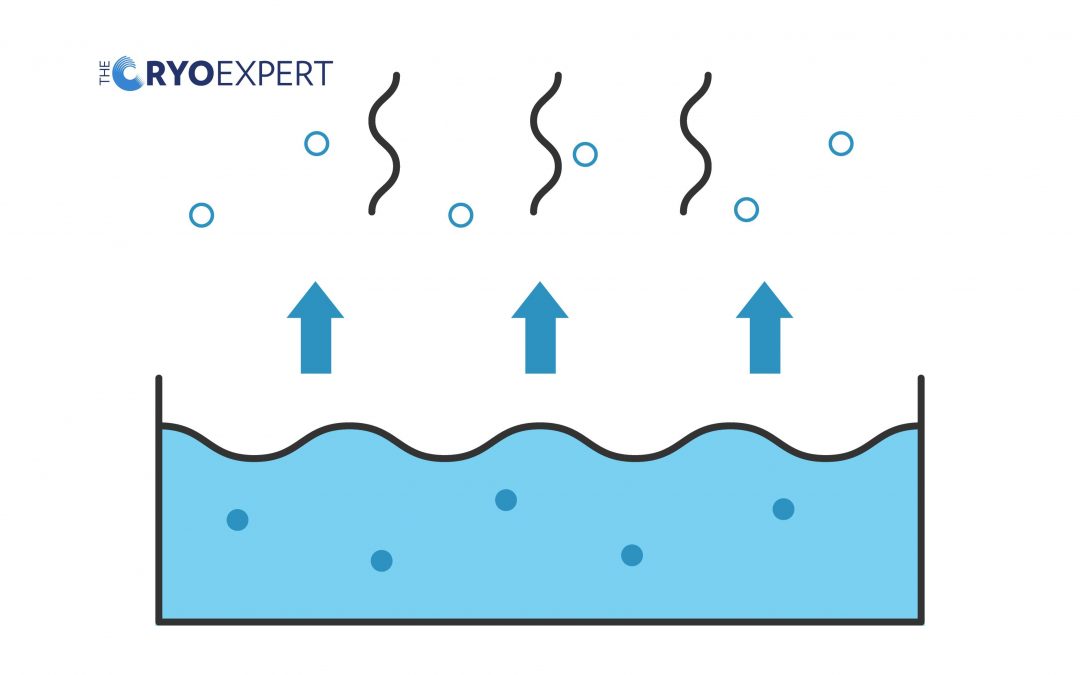
Managing boil-off gas is really important in systems that use very cold temperatures. The thing is, heat always finds a way in, and that makes the liquid turn into vapor. So, it’s not about stopping this from happening, but about dealing with it in a smart way. The way you choose to handle it can affect how much energy you use, how much you spend on equipment, and how flexible your operations can be.
Boil-Off Gas Management: Venting Strategy
So, the easiest way to deal with it is just to let it out. This means that the people in charge simply release the BOG straight into the air.
On the one hand, this solution offers:
- Minimal CAPEX
- High operational simplicity
However, it also creates major drawbacks:
- Product losses
- Environmental impact
- Regulatory constraints
Consequently, engineers typically limit venting to small-scale installations or emergency scenarios.
Boil-Off Gas Management: Compression and Reuse
So, what happens to the BOG is that operators either squeeze it to make it smaller and then put it back into the system, or they send it on to other people who can use it.
As a result, this approach:
- Recovers product value
- Requires moderate CAPEX
Nevertheless, compression introduces:
- Additional energy consumption
- Higher system complexity
So, engineers often use this solution in places like LNG terminals and systems that handle industrial gas. It’s a pretty common thing to do in these types of facilities.
Boil-Off Gas Management: Re-liquefaction Systems
For maximum efficiency, operators re-liquefy BOG by cooling and condensing it back into liquid. In this case, the main advantages include:
- Minimal product loss
- Stable tank pressure control
However, this strategy requires:
- High CAPEX
- Significant energy input for refrigeration
Thus, engineers favor re-liquefaction for large-scale storage or high-value products.
Boil-Off Gas Management: CAPEX vs OPEX Trade-Off
From a design perspective, each strategy follows a different economic balance:
- Venting → low CAPEX / high losses
- Compression → medium CAPEX / moderate OPEX
- Re-liquefaction → high CAPEX / optimized recovery
In addition, key drivers include:
- BOG rate (linked to heat leak in W/m²)
- Energy cost versus product value
- Operating profile (continuous vs intermittent)
Takeaway
Ultimately, Boil-Off Gas Management requires project-specific optimization. For example:
- Small-scale systems → venting or simple recovery
- Mid-scale systems → compression-based reuse
- Large-scale systems → re-liquefaction
So, managing boil-off gas is really important, it’s not just something you do on the side. It actually plays a big role in how well your cryogenic system works and can even affect the bottom line.

References and further reading
- GIIGNL — the international group of LNG importers
- SIGTTO — Society of International Gas Tanker and Terminal Operators
- Cryogenics (Elsevier) — peer-reviewed journal on cryogenic engineering
- International Institute of Refrigeration (IIR)
Continue reading on The Cryoexpert
- LNG Value Chain Overview
- Cryogenic Tank Pressure Control
- Cryogenic Vaporization Technologies
- Defrosting and Operational Cycles of Vaporizers
- Cryogenic Fluid Storage Design
Working on a cryogenic project?
Get expert engineering support for ASU, cryogenic storage, vacuum insulated piping, vaporization and regasification projects — from feasibility studies to commissioning. Tell us about your project and get a response within one business day.